Finally, there is a proper computer to run Windows!
MIPS Magnum 4000 is derived from the Microsoft Jazz development platform which was internally used to develop Windows NT (3.1). Then, it was ported to other CPU architectures incl. x86. Windows on MIPS was not successful but it was an important part of the history.
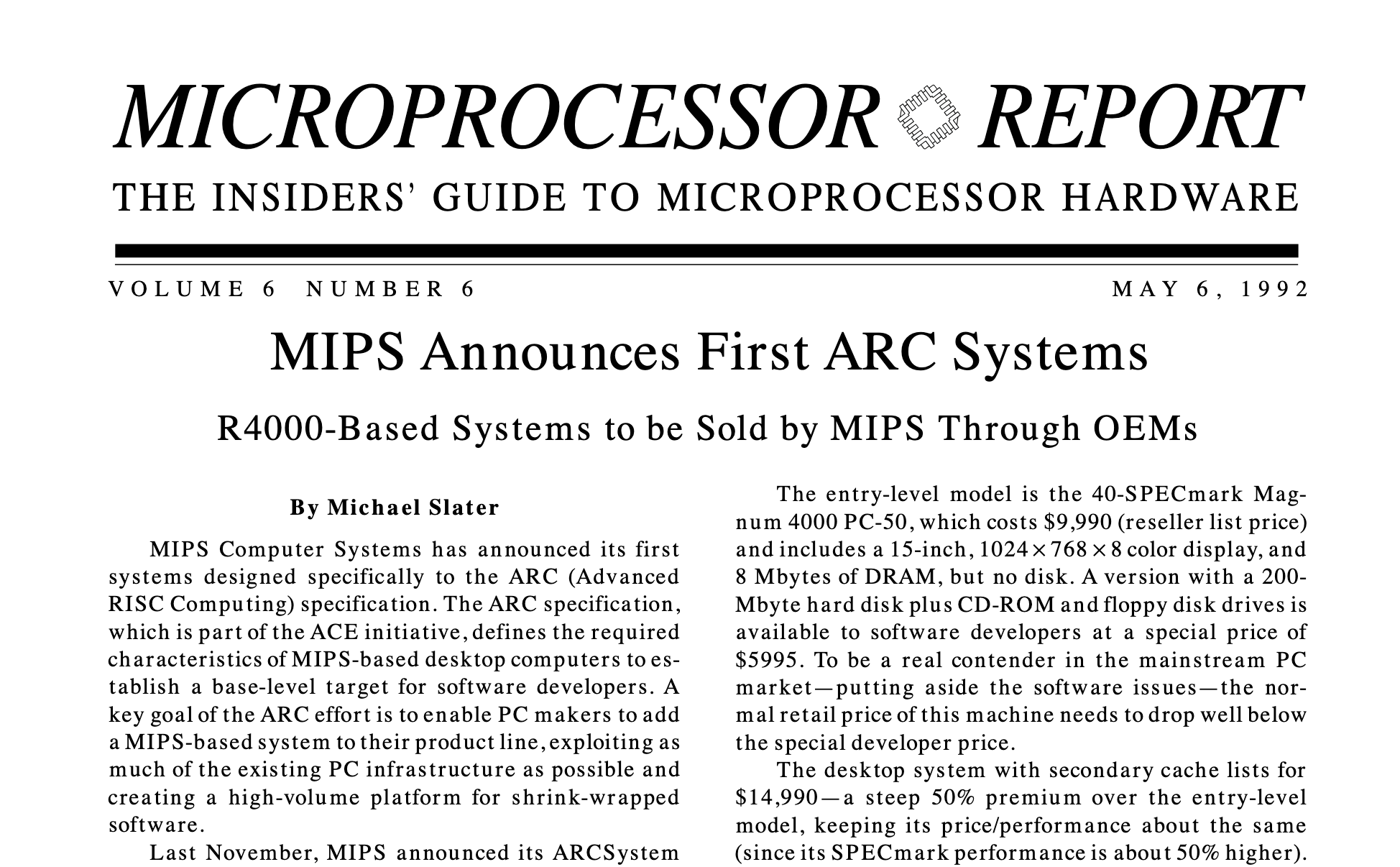
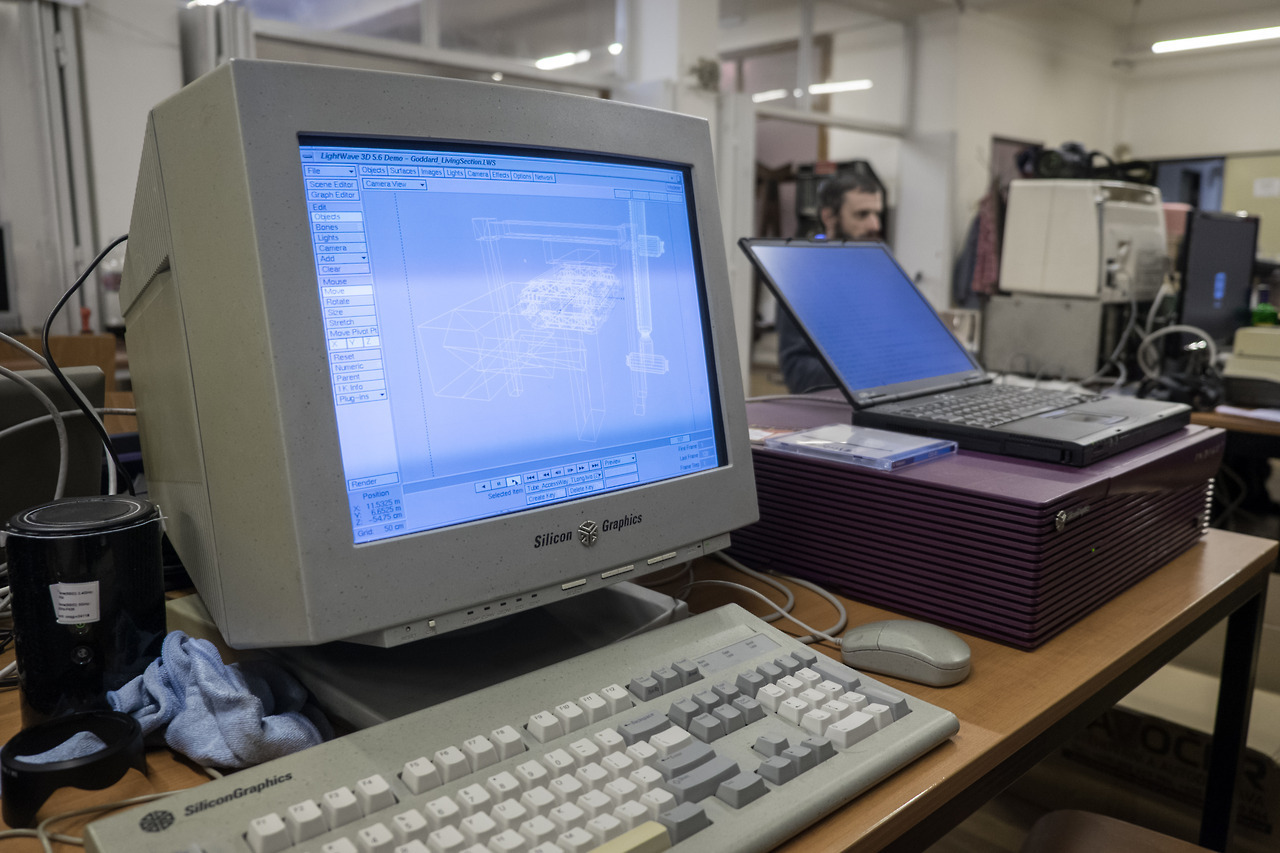
From the outside, the Magnum 4000 looked like a regular PC. There was a 100-MHz MIPS R4000 (on a 50-MHz internal bus) and 32-bit EISA bus for standard expansion cards (x86 option ROMs could be executed via emulation). The interesting part (for me) is the graphics hardware. There is a special 64-bit slot that allows attaching the graphics card directly to the processor bus to provide the maximum bandwidth. The card is based on a little-known INMOS G364 frame buffer with 2MB of video RAM. It supports only 256-color modes, no VGA compatibility and up to 1280×1024.
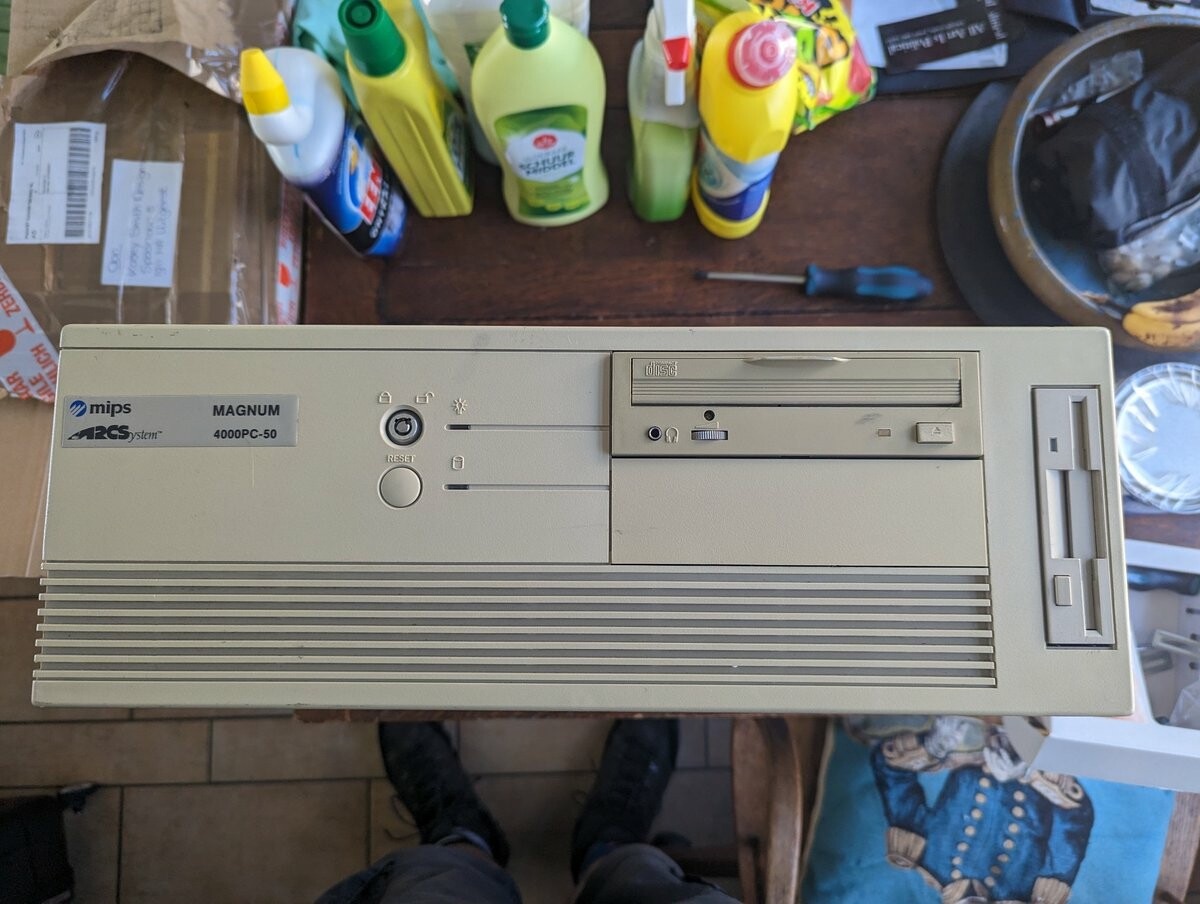
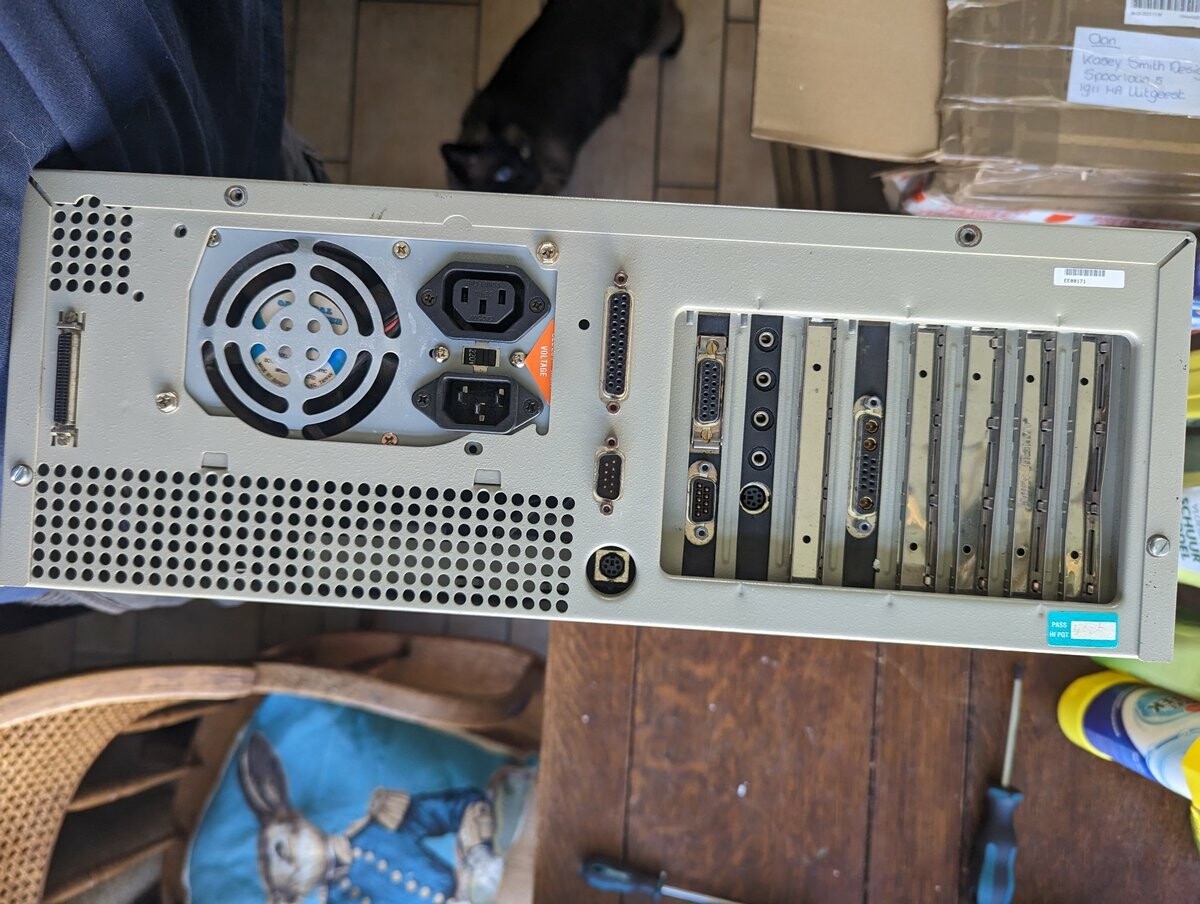
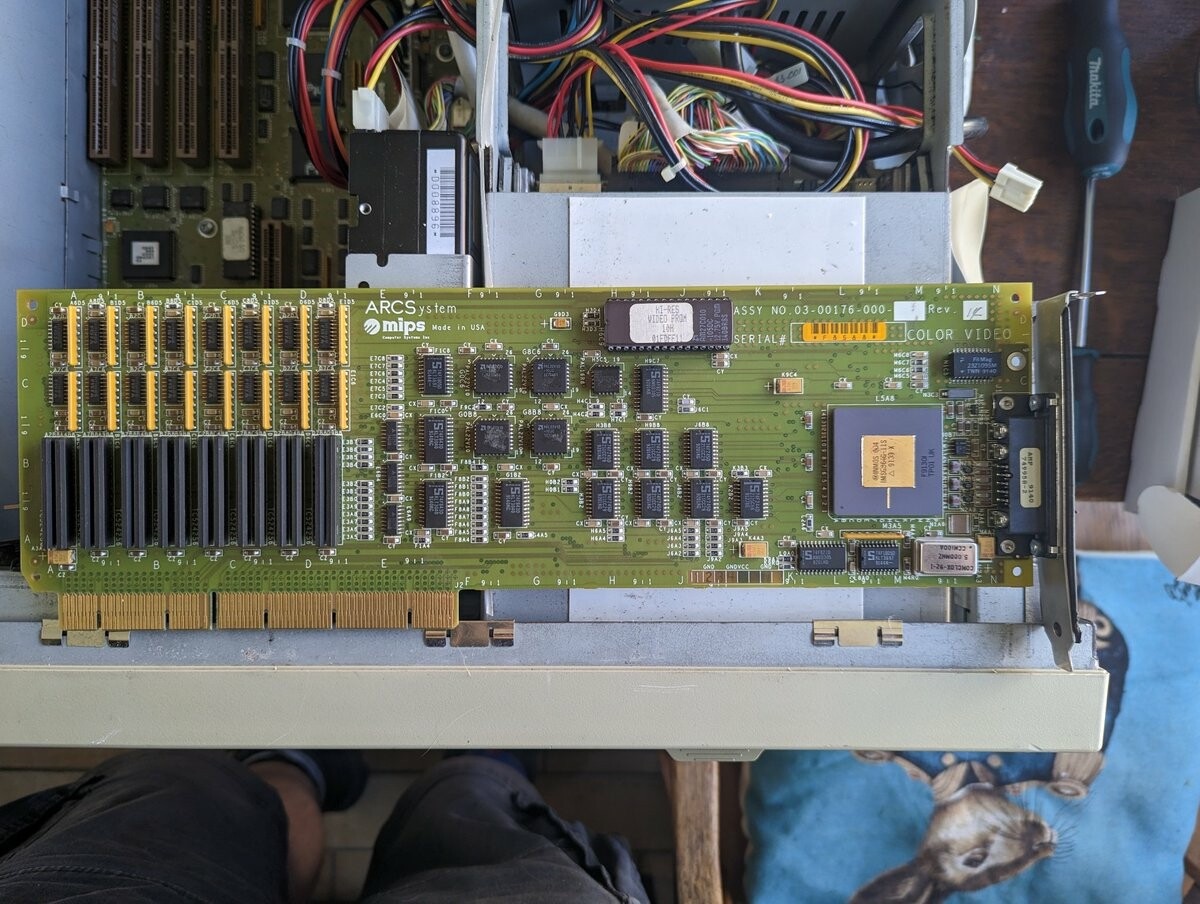
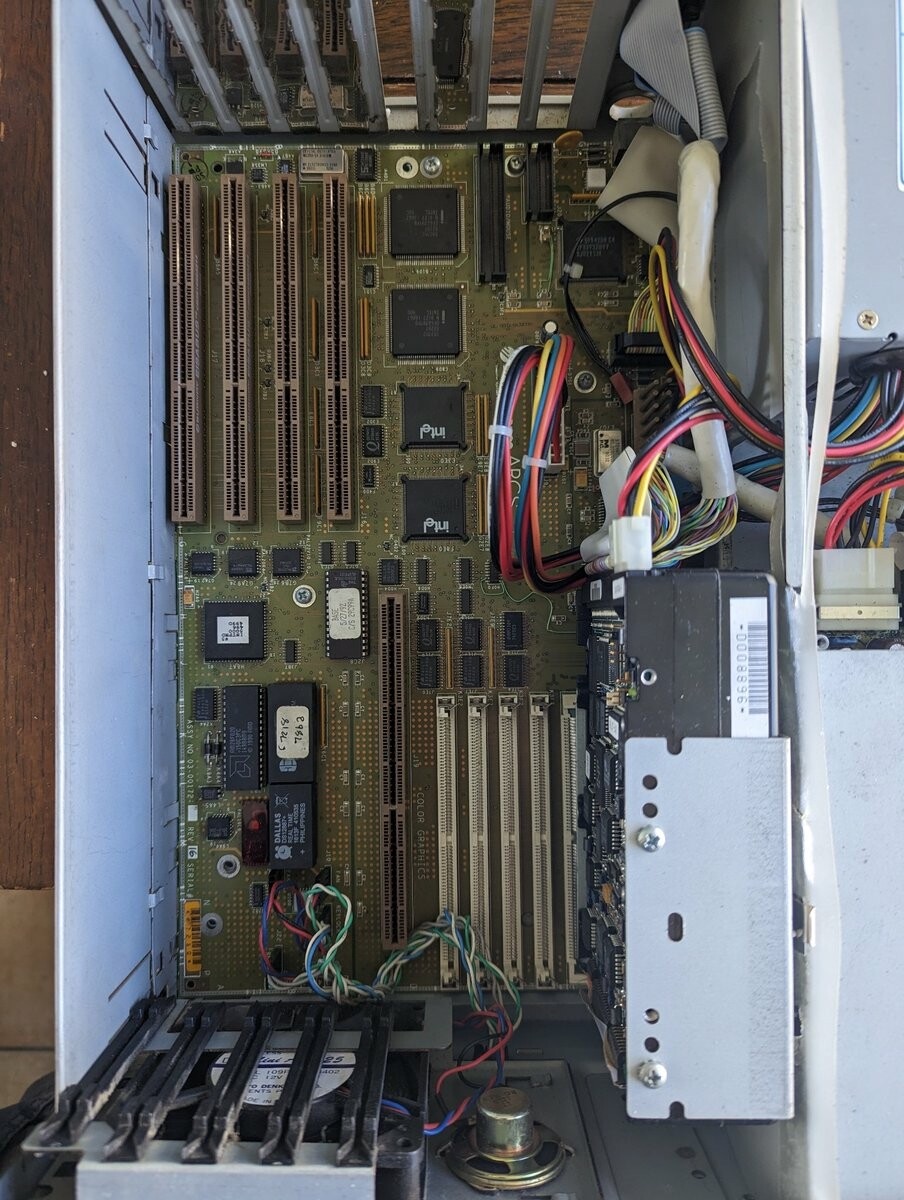
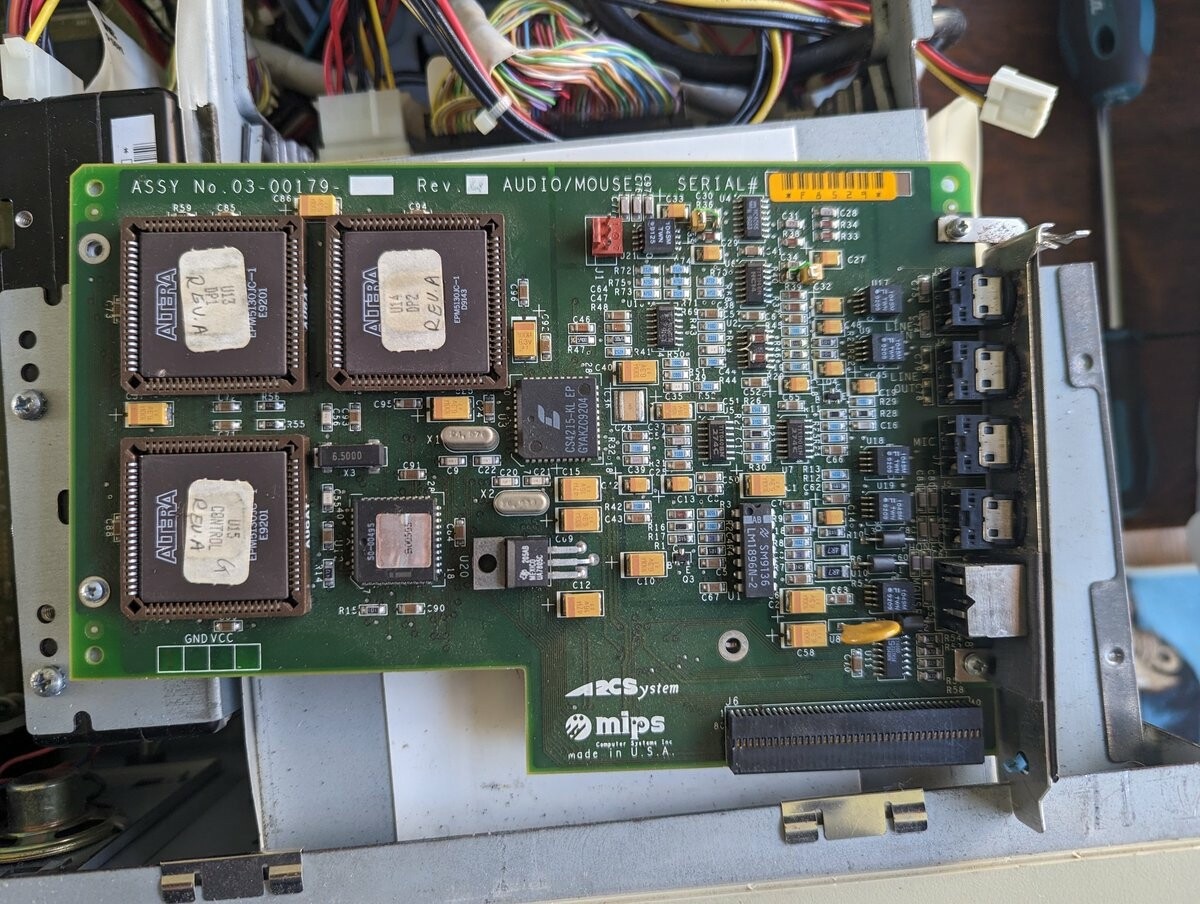
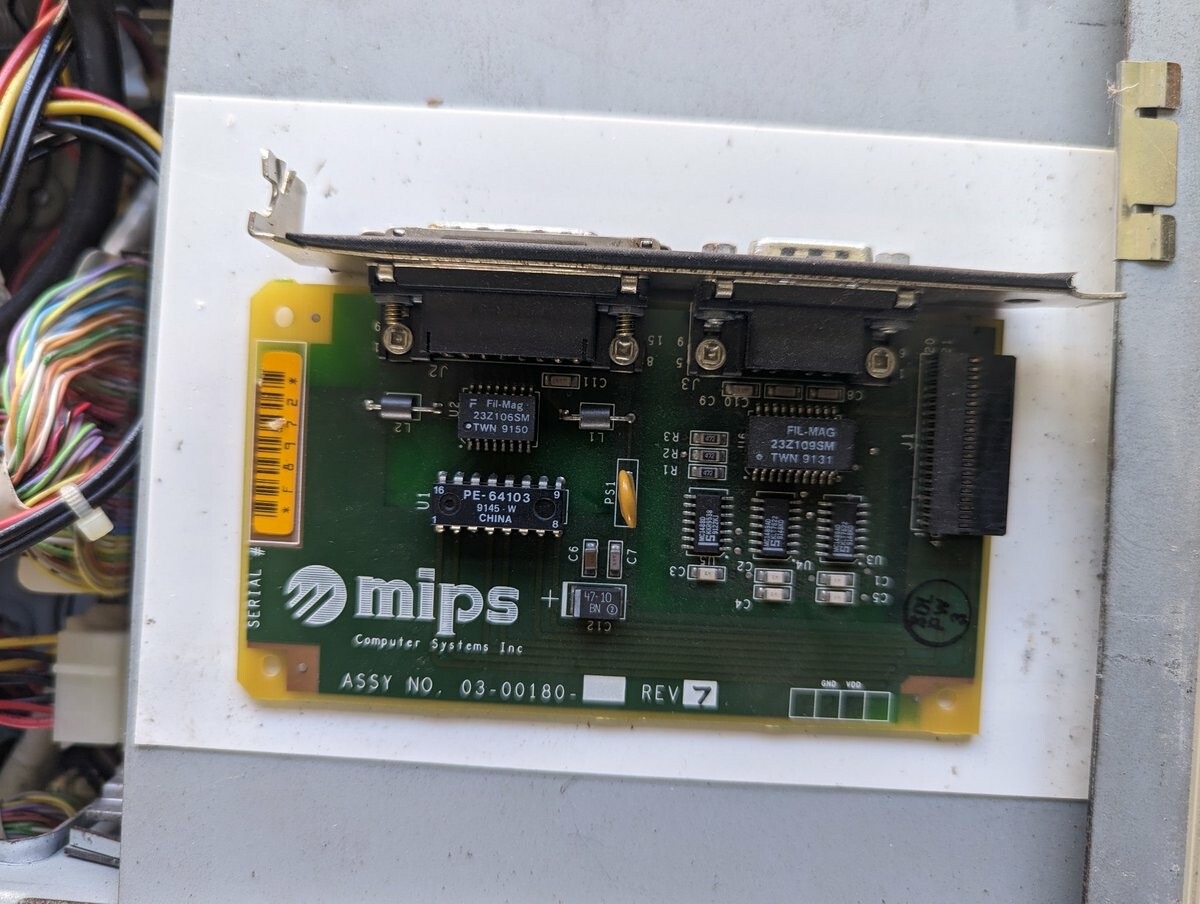
There are two parts that are the most interesting for me:
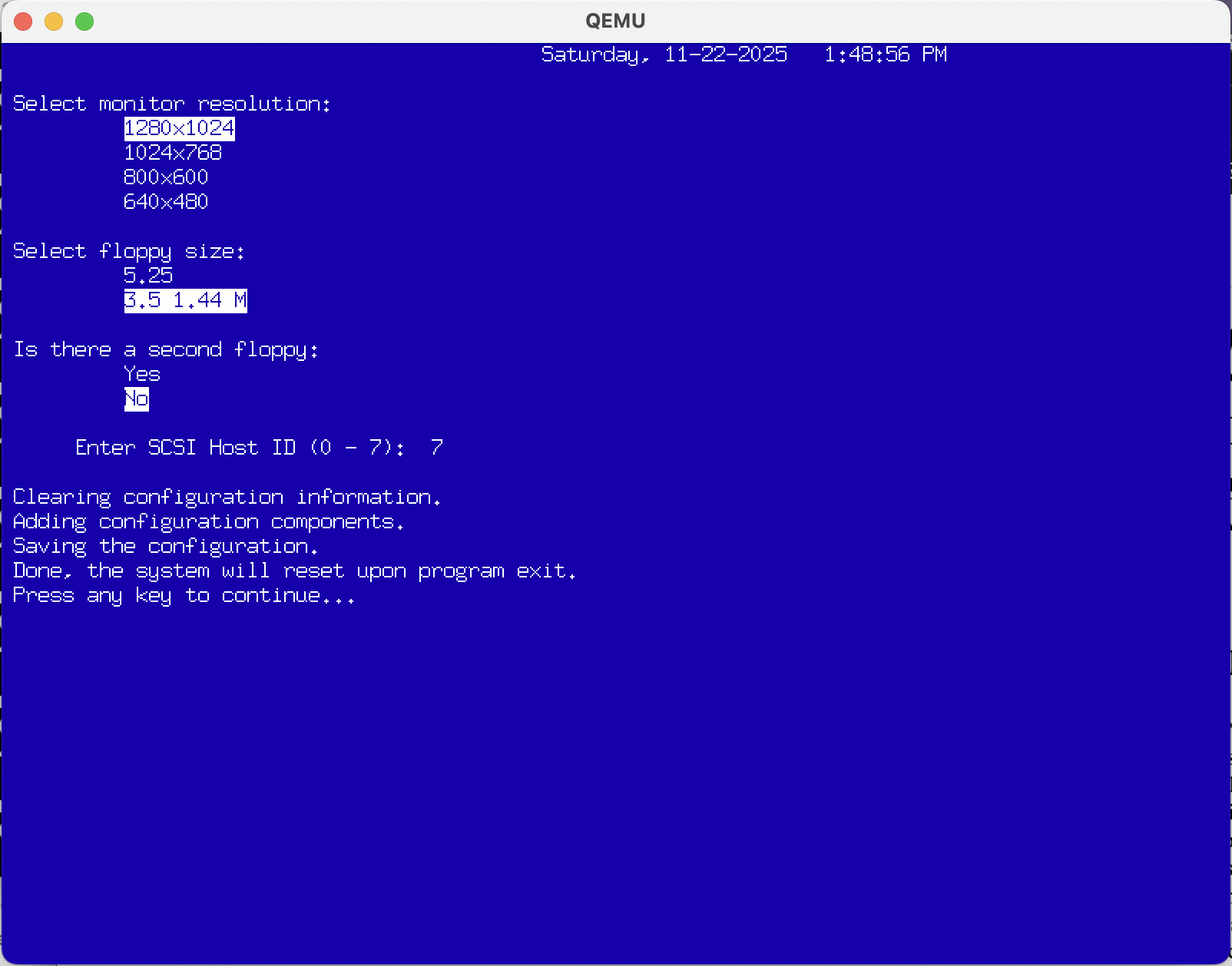
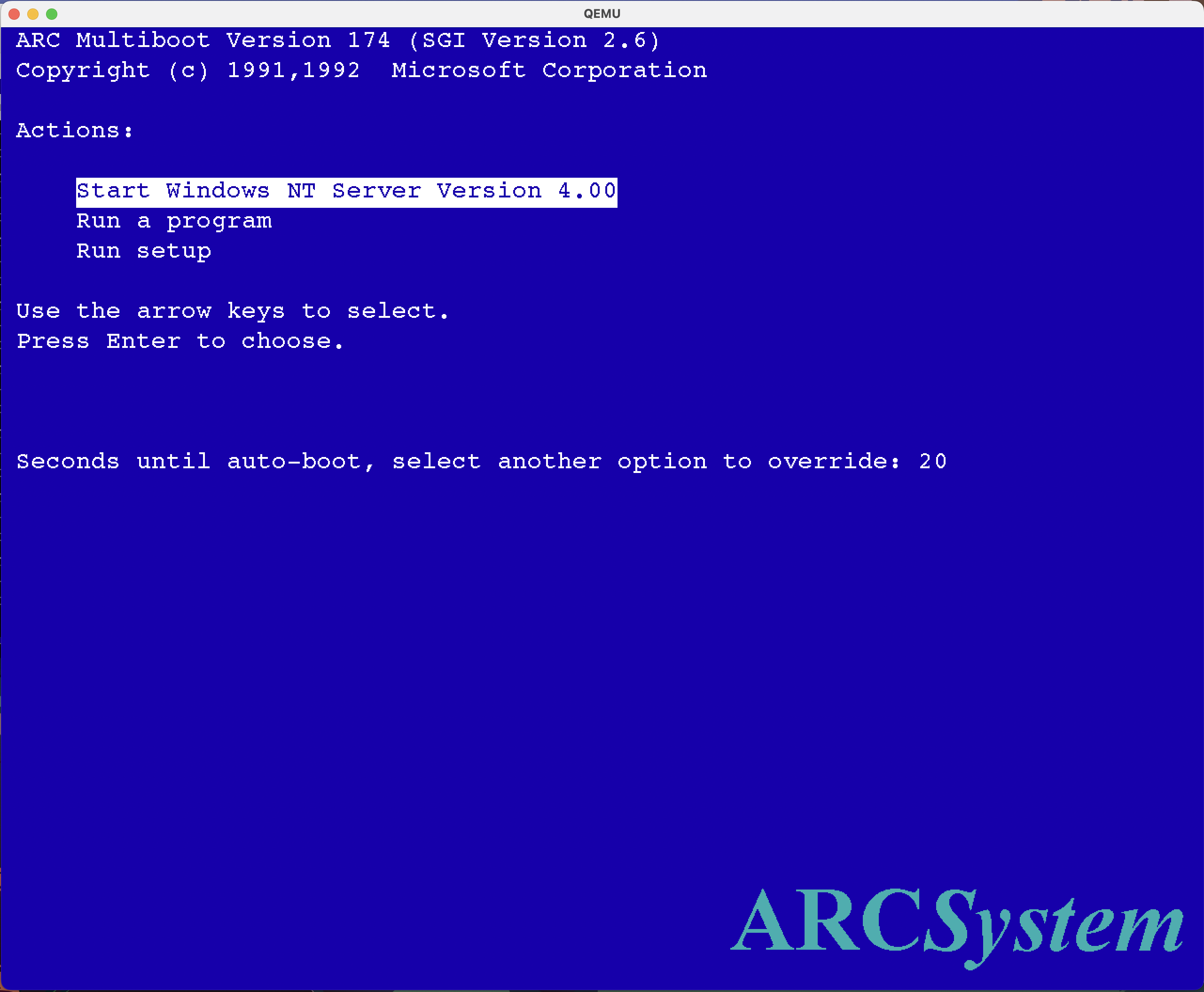
- You set the screeresolution in the ARC firmware and you have the same resolution during the boot and in Windows (where there is no way to change it). This allows using fixed-sync CRTs.
- There is no hardware acceleration (aside the hardware mouse cursor drawing) and not BitBlt. The philosophy here was to create no bottlenecks between the CPU and video memory and allow CPU to use its own full raw power for drawing.
TMM, the owner of the machine also has a nice step-by-step guide how to emulate it in QEMU: https://blog.tmm.cx/2022/06/11/running-windows-nt-4-mips-on-qemu-in-3-easy-steps/
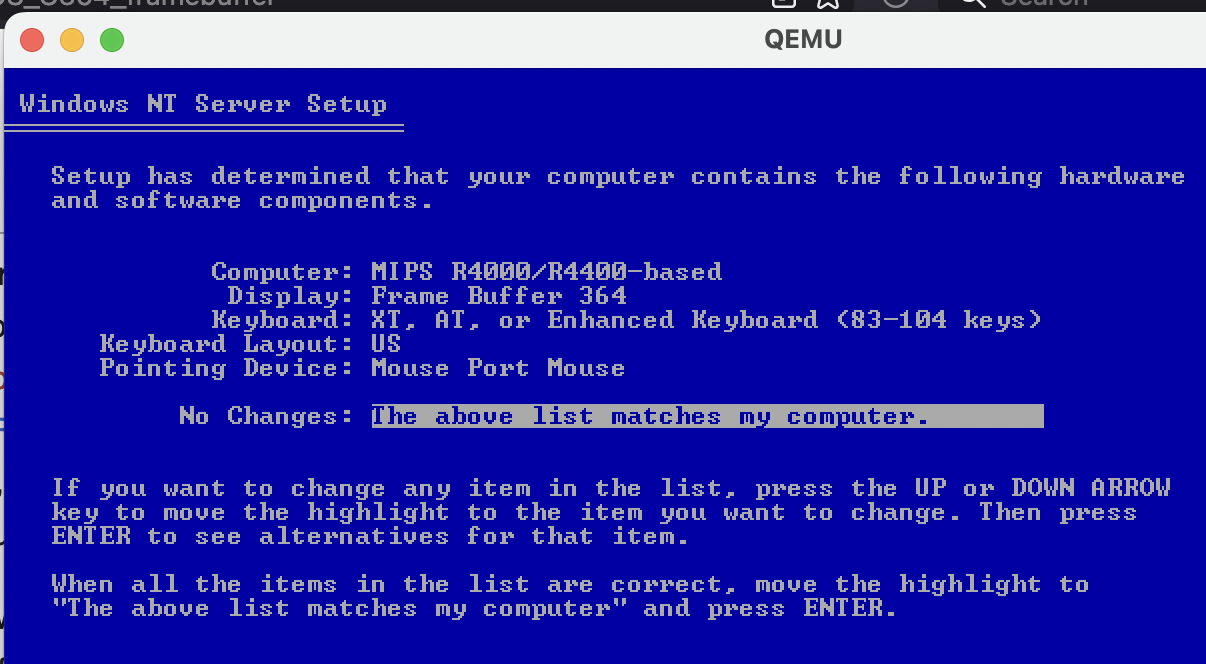
Although the ARC firmware is crude, it apparently has multiple fonts used based on the selected resolution: