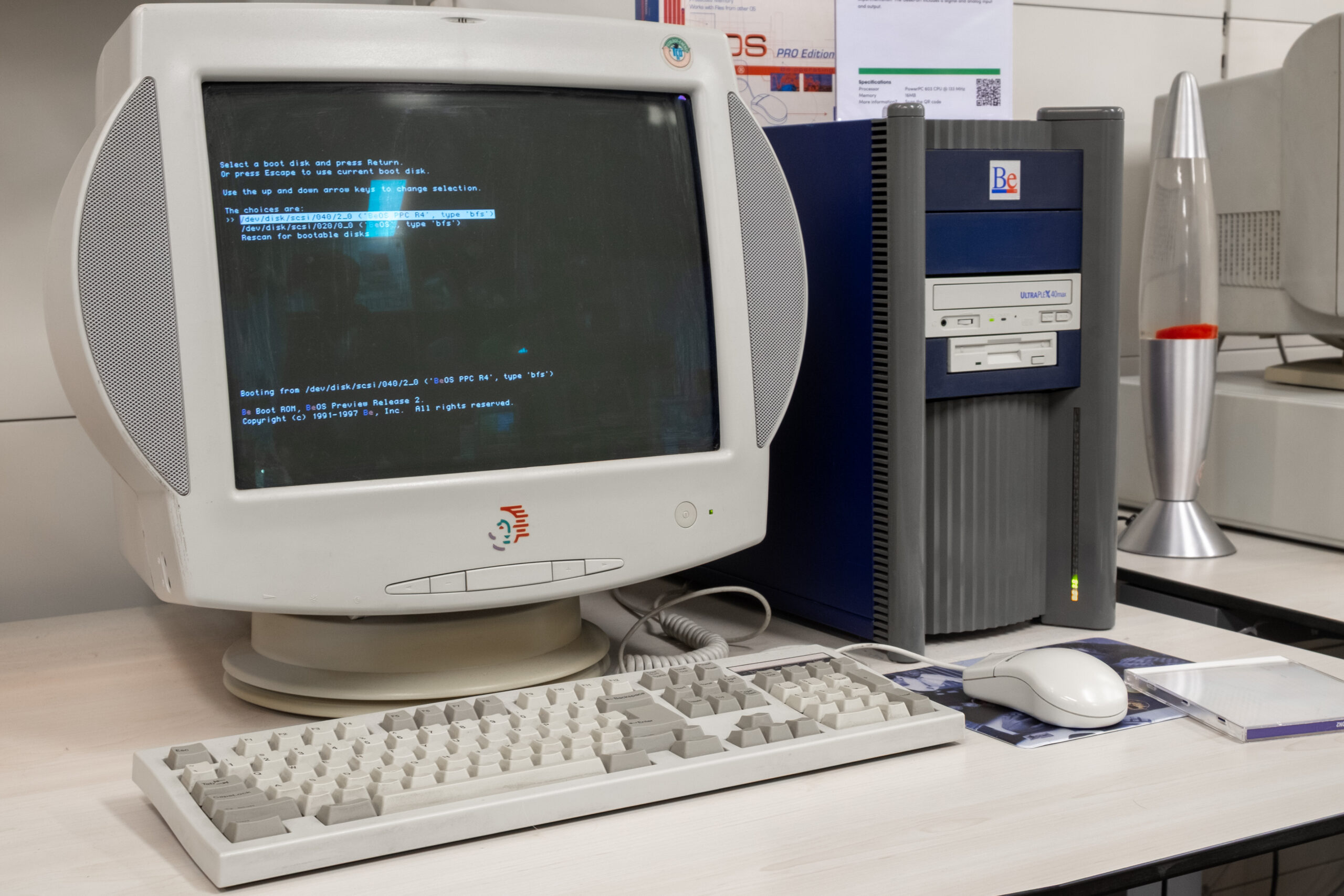
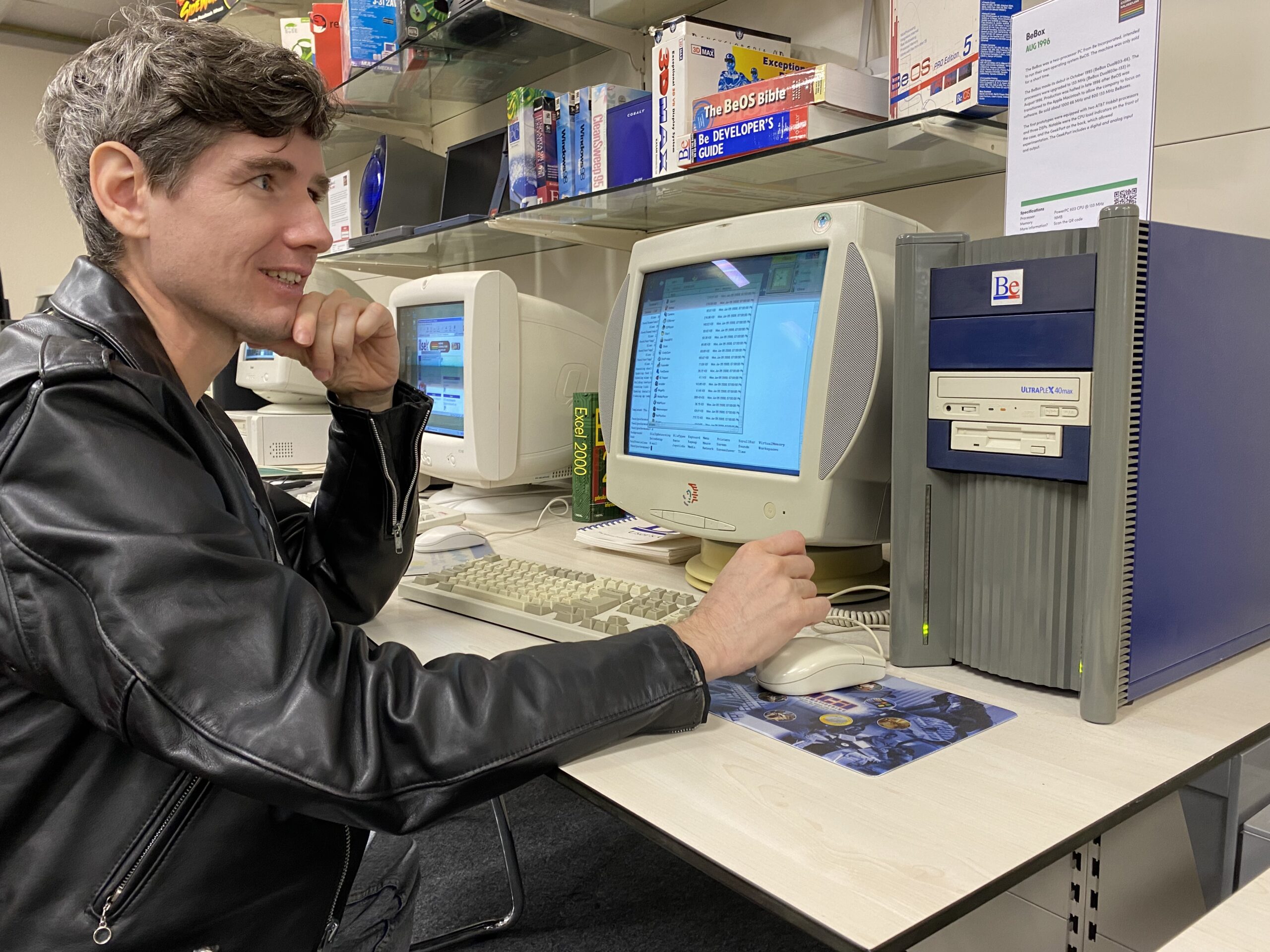
During our visit of the Home Computer Museum we spent a lot of time playing with a rare BeBox computer (or workstation?), only to find out that the “hero of computer magazines” from the past was not so great after all. We also corrupted the OS installation on the museum machine and spent some time reinstalling it with a more appropriate version of BeOS…
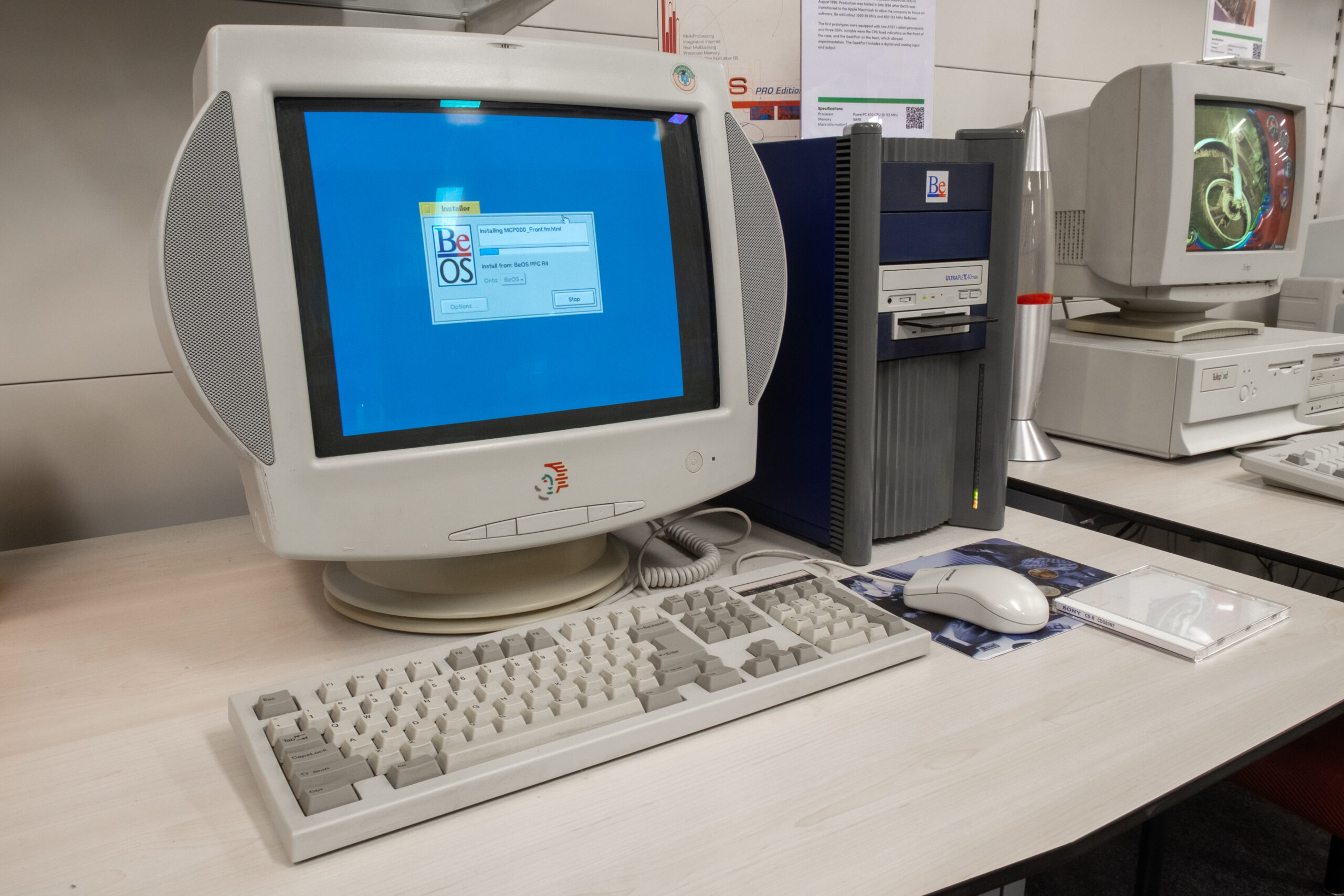
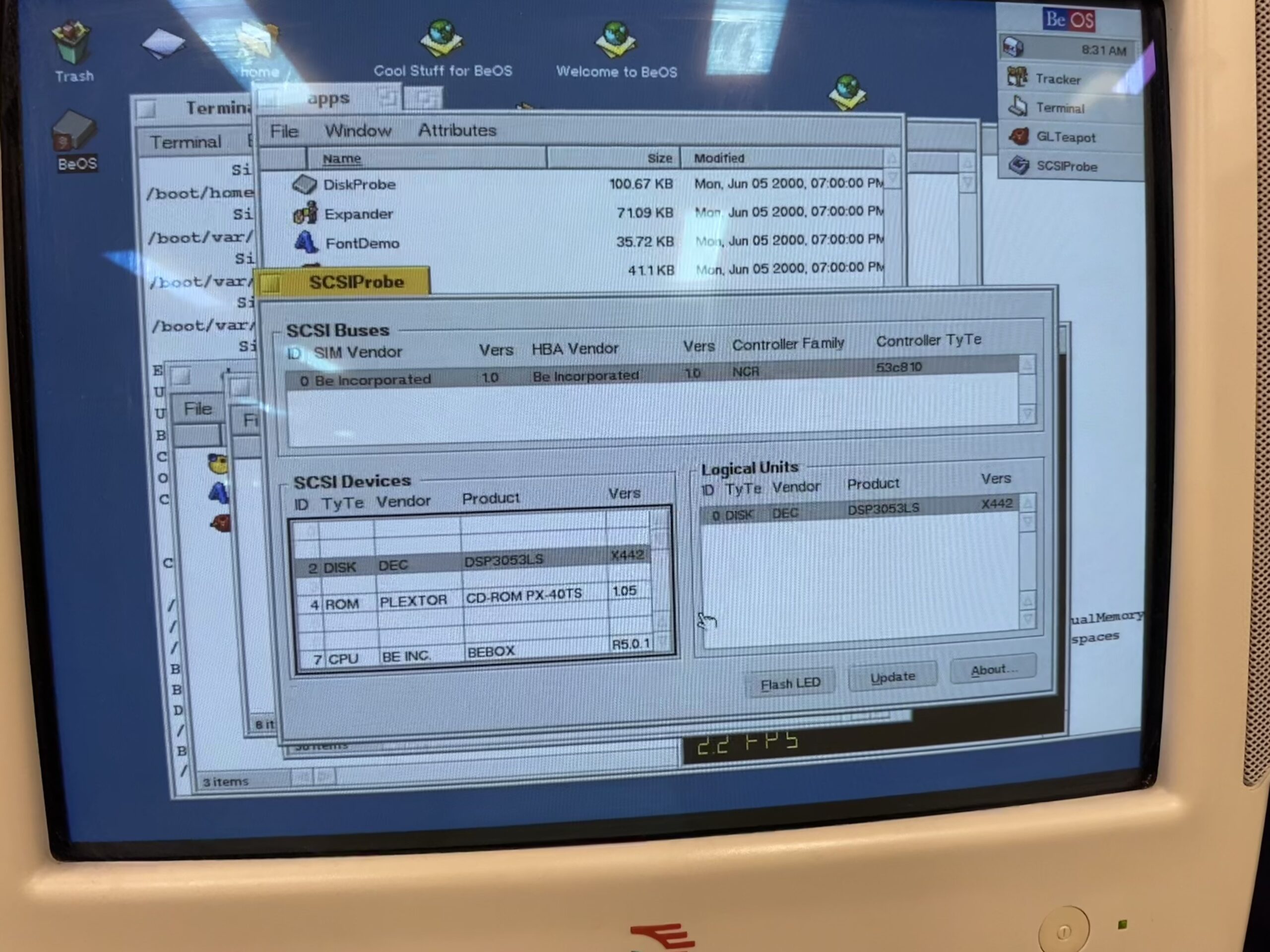
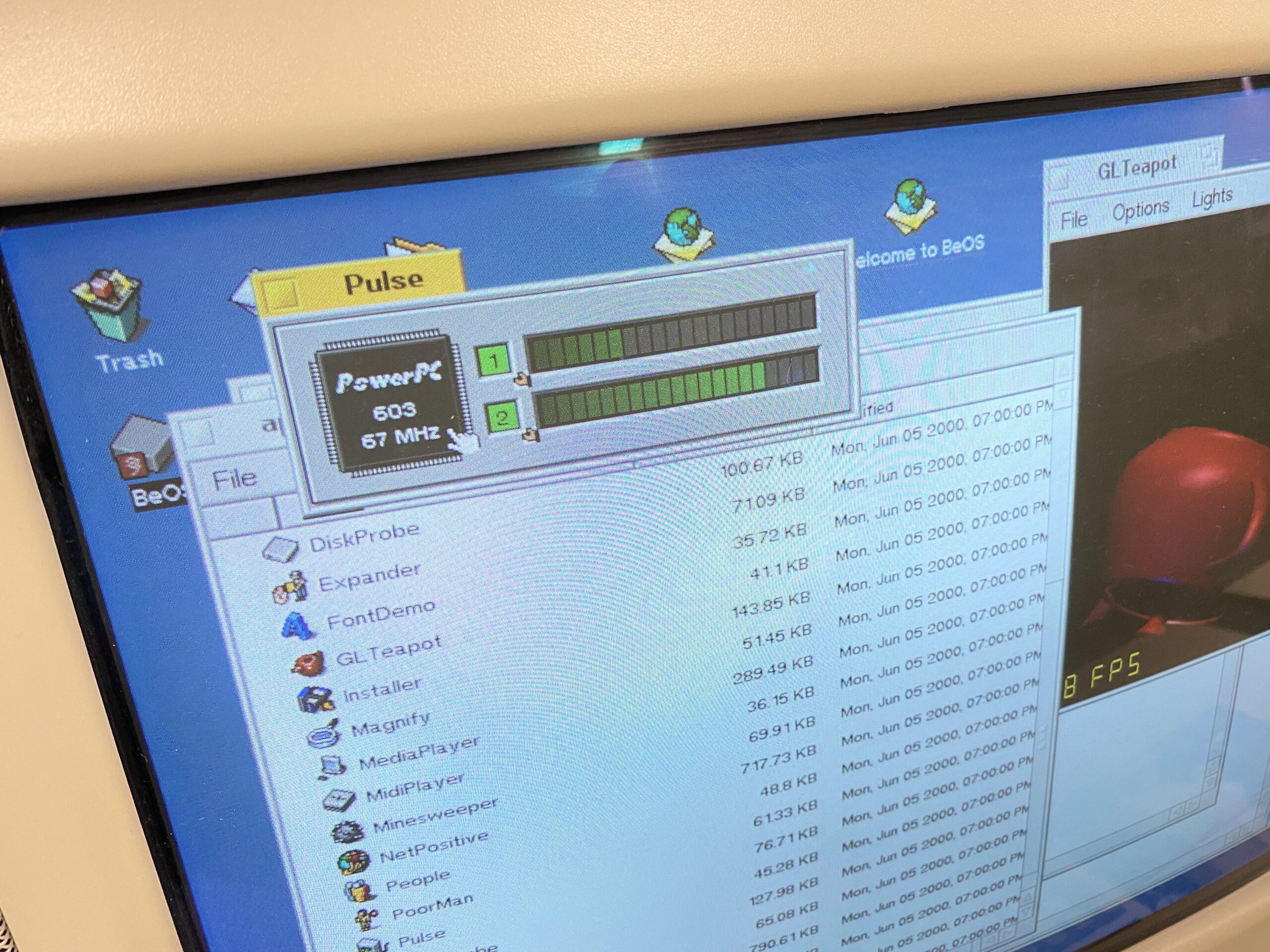
The machine always sounded super nice on paper. After all, it was a dual CPU machine with a 66-MHz PowerPC 603 and a shiny new “real-time OS” in 1995. It aimed to compete with high-end standard PCs or entry-level workstations. To my surprise, it’s not fast. I have experience with a (single) 66-MHz PowerPC 603 in Bull Estrella running the PowerPC version of Windows NT 4.0 – that computer was flying. Everything was instant except for the x86 emulation of non-native programs (indeed).
BeOS on BeBox was nowhere near that fast, which was strange when Windows NT was in many ways more advanced OS… and not specifically taylored to a single machine. There are hardware reasons behind it – the Bull Estrella (actually a rebranded Motorola Powerstack DT603-66) had a mainboard that allowed the CPU to operate with 66-MHz external bus and there was a large L2 cache board further increasing the performance. BeBox had two 66-MHz PowerPC 603s but they were configured to run at 33MHz externally . Due to the increased complexity of the dual-CPU system, they omitted an L2 cache. Together with inefficient PPC603 bus protocol, this decreased the perceived performance to 486 levels in many ways. Only certain tasks (like the multi-threaded Mandelbrot fractal demo) that were not memory-thoughput hungry worked super-fast given PowerPC good floating point performance (all PowerPC did support FMA instruction = fused multiply-add). Two CPUs on the slow bus only made the starving worse.
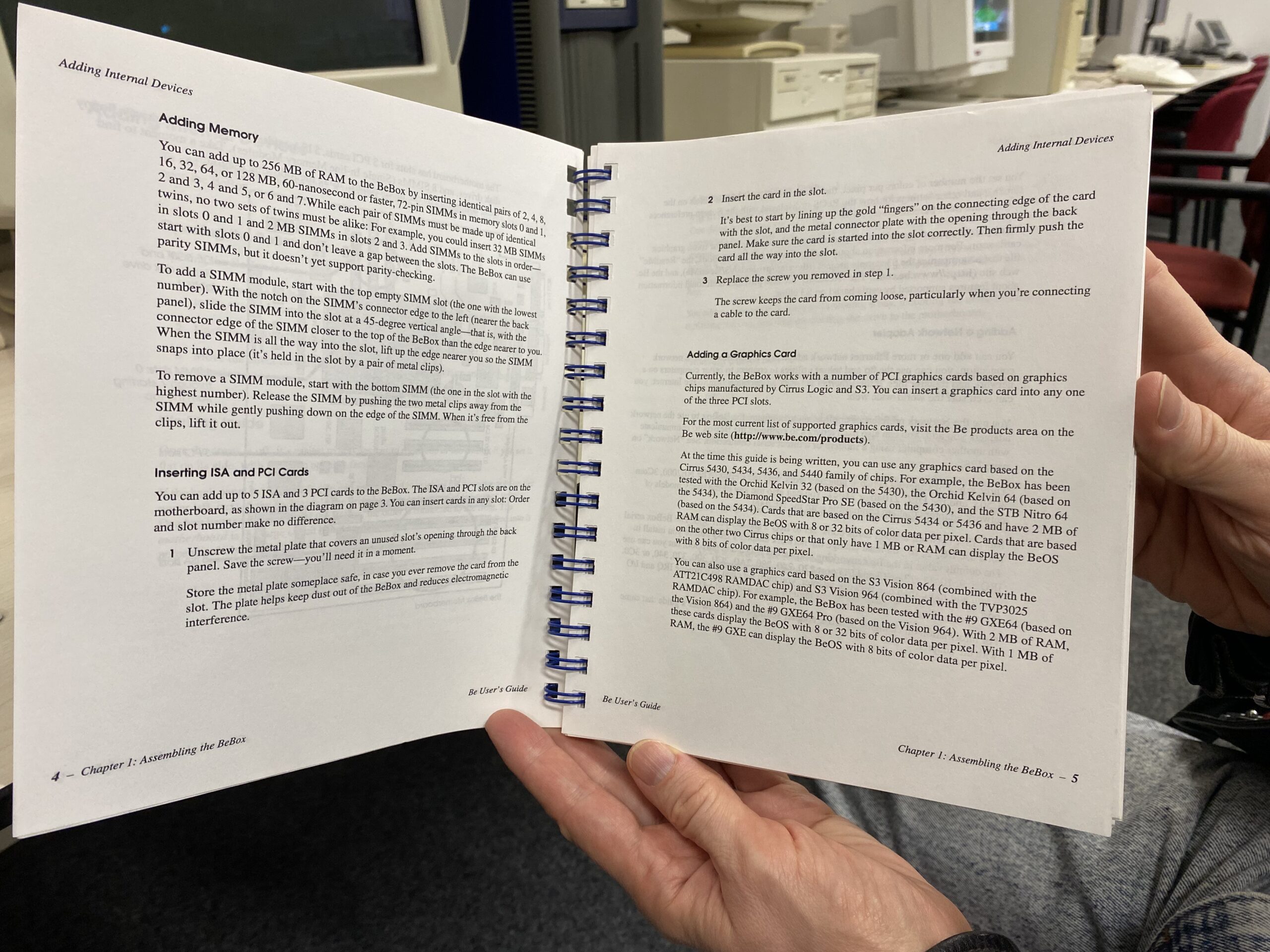
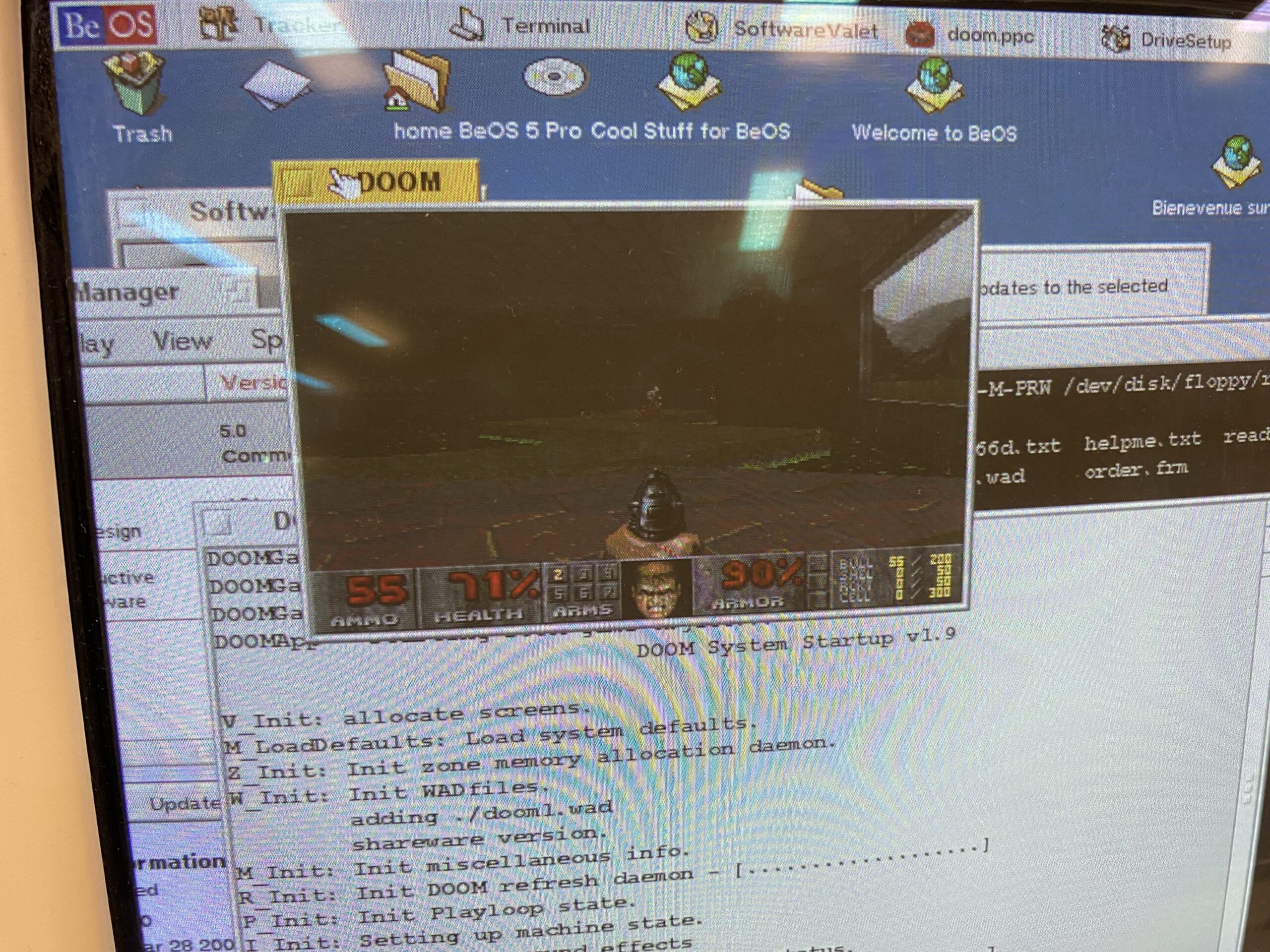
We could discuss some strange design decisions regarding process handling and the implementation of the “real-time” scheduler, but that would be nitpicking. My main disappointment was the overall performance.